
Pigmentation Treatment in Gurgaon: Melasma, Dark Spots and Uneven Tone
Medically reviewed by Dr Ravikant Bhushan, MBBS, MD (Dermatology), visiting dermatologist · Reviewed 9 November 2026
Pigmentation has many causes, and the right treatment depends on which one you have. Our doctor diagnoses the type of pigmentation first, then builds a plan around daily sun protection, prescription creams and, only when suitable, in-clinic procedures – with maintenance for conditions such as melasma that tend to return.
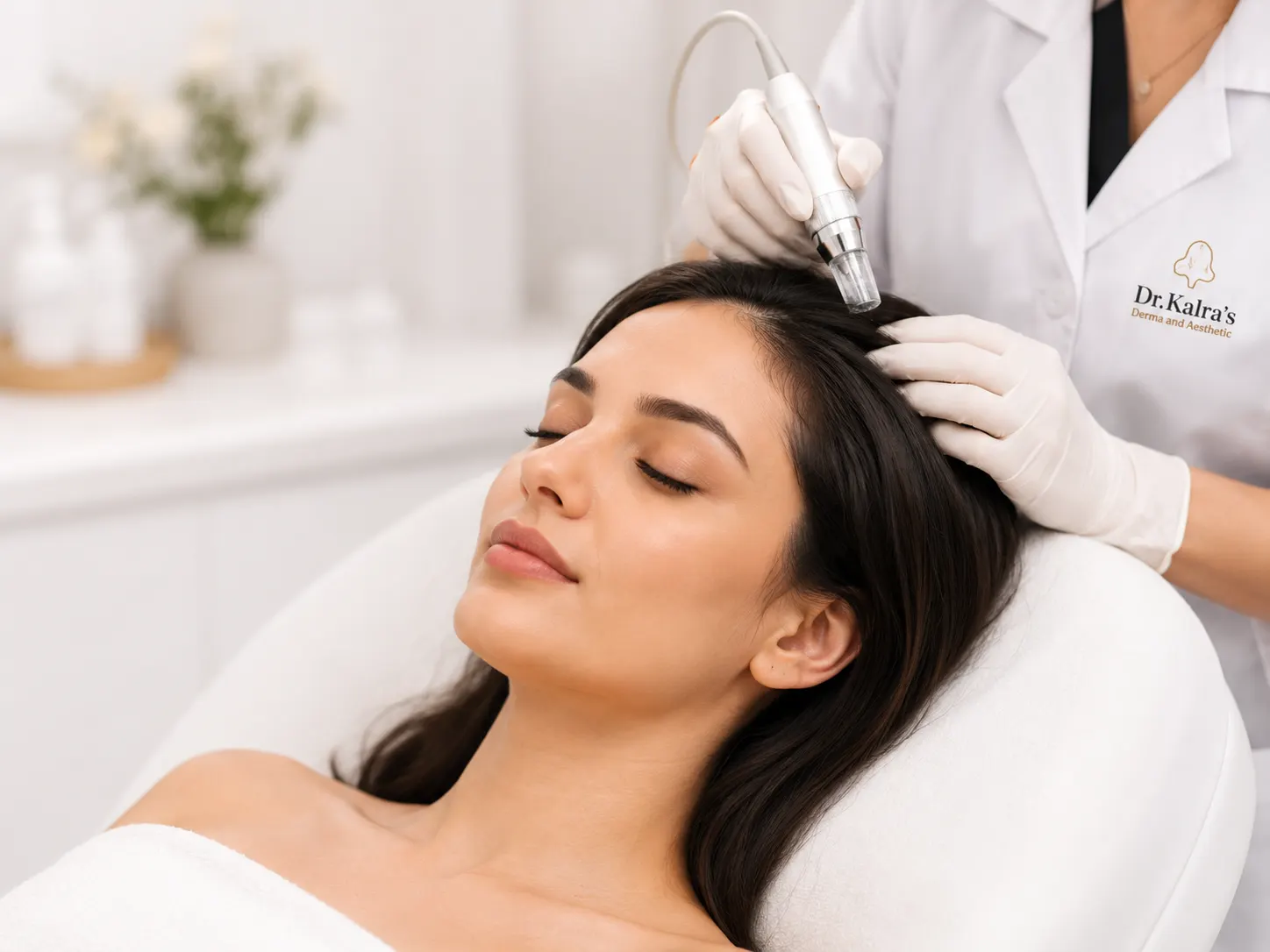
Pigmentation is a broad term. Melasma, sun spots, freckles, tanning, dark marks after acne or injury, and darkening around the eyes, neck or underarms have different causes and respond to different treatments. Some, such as melasma, are long-term conditions that can be controlled well but tend to come back with sun exposure or hormonal changes.
At Dr. Kalra’s Derma and Aesthetic, pigmentation is diagnosed before it is treated. This avoids harsh or unsuitable treatments – including steroid-containing creams bought without a prescription, which can thin the skin and make pigmentation worse.
Common types of pigmentation
- Melasma – symmetrical brown patches on the cheeks, forehead, nose or upper lip, linked to sun, heat and hormones.
- Post-inflammatory hyperpigmentation – dark marks left after pimples, insect bites, eczema, injury or harsh treatments.
- Sun spots and freckles – small flat brown spots in sun-exposed areas.
- Tanning and uneven tone – overall darkening from sun exposure.
- Darkening of the neck, underarms or skin folds – which can sometimes be linked to insulin resistance or other health factors.
- Dark circles – which have several causes, from pigment to shadows and blood vessels (see dark circle treatment).
Who may benefit from a consultation
- Patchy brown pigmentation on the cheeks, forehead or upper lip
- Dark marks left after pimples, insect bites or injury
- Sun spots, freckles or an uneven skin tone
- Darkening of the neck, underarms or around the eyes
- Pigmentation that worsened after using a cream from a pharmacy or salon
What happens at your consultation
1Examine the pattern. The doctor looks at where the pigmentation is and how deep it appears.
2Review triggers. Sun and heat exposure, hormonal medicines, pregnancy, cosmetics and past use of steroid creams are discussed.
3Check related causes. Where needed, the doctor looks for linked conditions – for example, darkening of the neck can be associated with insulin resistance.
4Build a plan. Sun protection, prescription topical treatment and, if suitable, in-clinic procedures, with follow-up and maintenance.
Treatment options at the clinic
- Daily broad-spectrum sunscreen and physical sun protection – the foundation of every pigmentation plan.
- Prescription lightening creams – used under supervision for the right length of time.
- Oral medicines – for selected melasma cases after screening.
- Chemical peels – to speed up the fading of superficial pigmentation.
- PICO laser – a picosecond laser for selected pigment problems such as sun spots and some types of melasma. It is used cautiously, because lasers can sometimes worsen melasma and need careful settings in darker skin, and a patch test is always done first.
All the options above are available at the clinic. Procedures are doctor-led and carried out by the doctor or by trained staff under dermatologist supervision, and your doctor recommends only the options that suit you after examining you.
Side effects and risks to understand
- Irritation, redness or peeling from topical treatments.
- Peels and lasers can occasionally make pigmentation worse (rebound or post-inflammatory darkening), especially without strict sun protection.
- Melasma often returns with sun exposure or hormonal change, so maintenance is part of the plan.
Recovery, results and aftercare
- Pigmentation usually fades gradually over weeks to months.
- Most in-clinic procedures for pigmentation need little downtime, but sun avoidance afterwards is essential.
- Long-term maintenance and follow-up help you keep your results.
Your doctor
Consultations are with Dr Ravikant Bhushan, MBBS, MD (Dermatology) · Visiting dermatologist · 20+ years of experience. Treatment is offered only after examination, and suitability, risks and costs are explained before you consent. Individual results vary. Read more about the clinic →
Frequently asked questions
Can pigmentation be removed permanently?
Are lasers the best treatment for melasma?
Why do I need sunscreen every day?
Is it safe to use fairness creams from the pharmacy?
Can pigmentation during pregnancy be treated?
Book a consultation in Sector 11, Gurugram
Dr. Kalra’s Derma and Aesthetic is at First floor, 3/5, Khandsa Rd, opp. Madhur Mobile, Shivaji Nagar, Sector 11, Gurugram, Haryana 122001, with a lift to the first floor and parking available. We are open 11 AM–7 PM, Monday to Sunday. Khandsa Road’s Bhuteshwar Mandir is a nearby landmark, and the clinic is close to Rajiv Chowk. Walk-ins are welcome. Call or WhatsApp +91 93105 34535, or request an appointment online – we call you back within 10 minutes during clinic hours.
Related pages
About this clinic
Dr. Kalra’s Derma and Aesthetic, Khandsa Road, Sector 11, Gurugram – serving patients since 2008. Founder: Dr Kapil Kalra, BDS, MDS, Diplomate ICOI (dental surgeon and implantologist). Dermatology consultations and medical review: Dr Ravikant Bhushan, MBBS, MD (Dermatology), visiting dermatologist with 20+ years of experience.